
Entry Information
Selected
25D0022
Claudia Mauri - Life Science and Medicine
SH Cheng - Life Science and Medicine
45
43
44
Chun Wai Wong
Dr
Male

07/03/1997
Hong Kong
Hong Kong Identity Card
Y5875
Chinese
Email hidden; Javascript is required.
+18574681069
149 13th Street, 3rd Floor
Charlestown
United States
Life Science and Medicine
N/A
I am excited to apply to participate in the 2nd Hong Kong Laureate Forum, a prestigious gathering of eminent scientists and aspiring researchers. As a recent Ph.D. graduate in Cancer Sciences and a researcher deeply engaged in cancer immunology, I am driven to address pressing challenges in cancer treatment through innovative, interdisciplinary approaches. My current research is to employ a systematic immunology approach to define response and resistance mechanisms associated with immune checkpoint blockade therapy (CPB).
The Forum’s dynamic environment, featuring intellectual seminars, discussions, and cross-cultural exchanges, presents an unparalleled opportunity to interact with the world’s foremost scientists, including Shaw Laureates. I am particularly eager to exchange ideas on the intersection of resistance to CPB and cancer cell stress mechanisms. Additionally, connecting with Hong Kong’s young scientific investigators would also be invaluable, as I am considering returning to Hong Kong for my next career goal.
Through the Forum, I aim to broaden my scientific horizons, enhance my interdisciplinary perspective, and build connections with like-minded peers and mentors. I am confident that this experience will inspire novel approaches in my research and contribute to the Forum’s mission of advancing scientific excellence and fostering global collaboration.
Postdoc
Cancer Immunology and Immunotherapy
Massachusetts General Hospital, Harvard Medical School; Broad Institute of MIT and Harvard
Boston/Cambridge
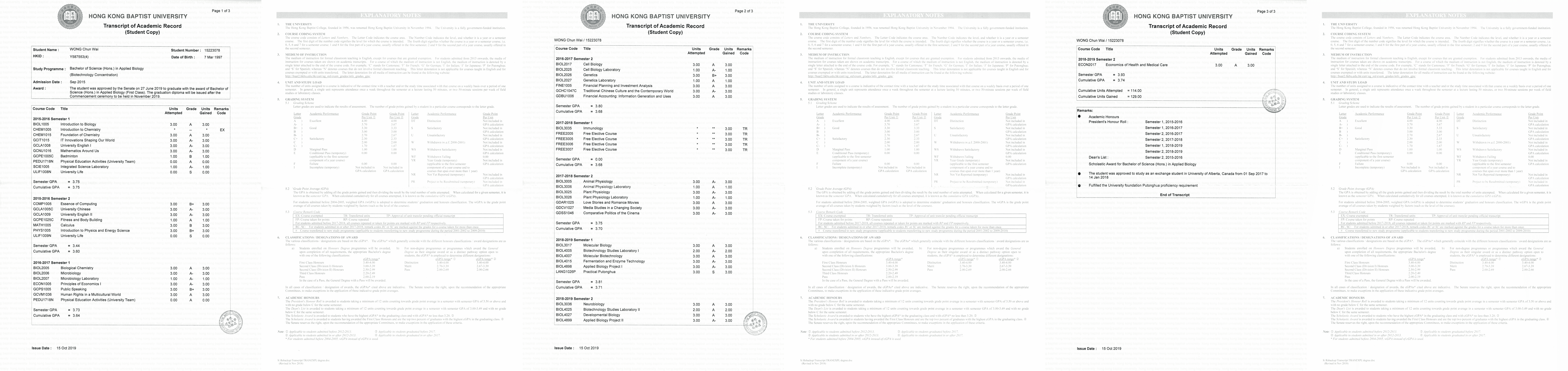
File format: jpg, png. Max. file size: 3MB
If your letter or document is not in English, please upload a translated version underneath.
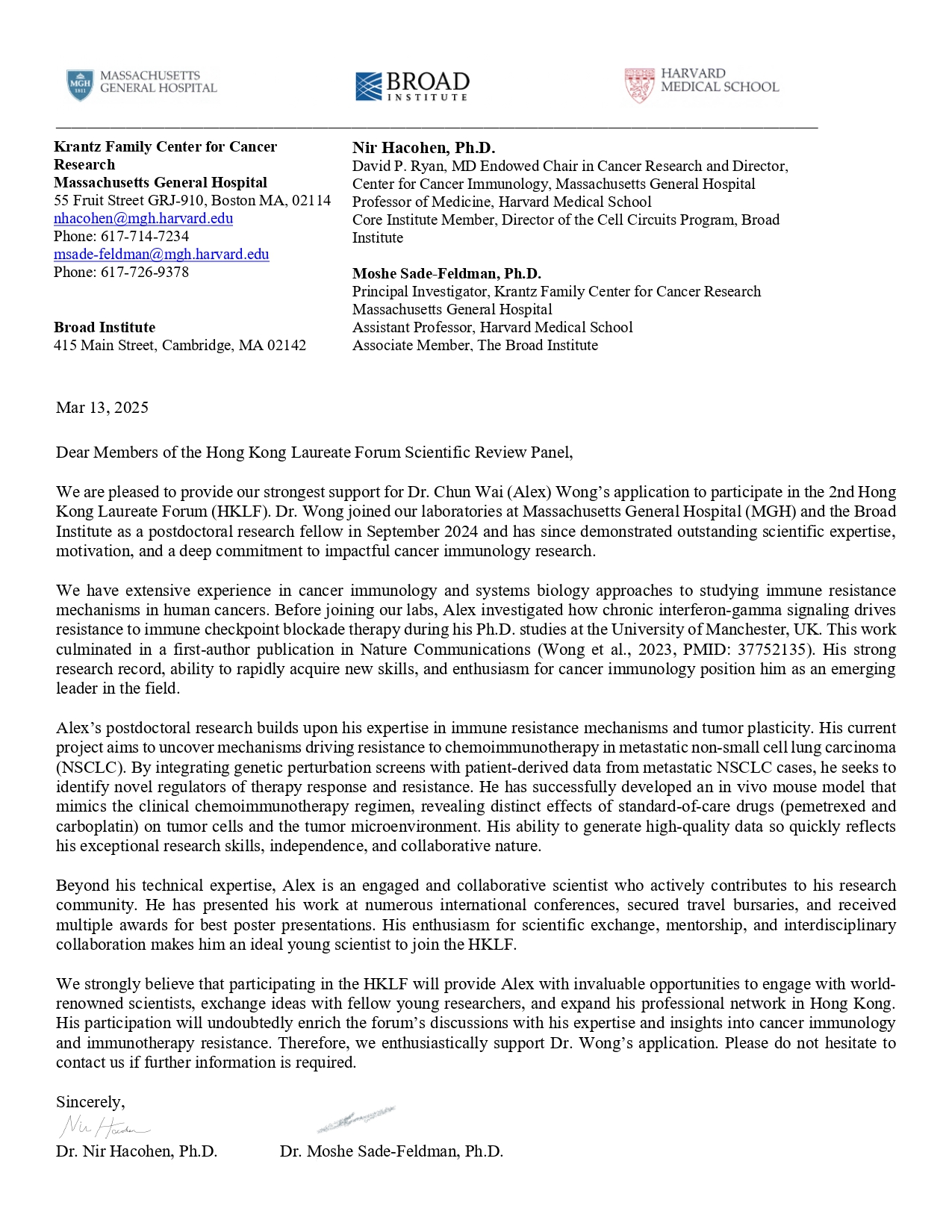
Massachusetts General Hospital, Harvard Medical School
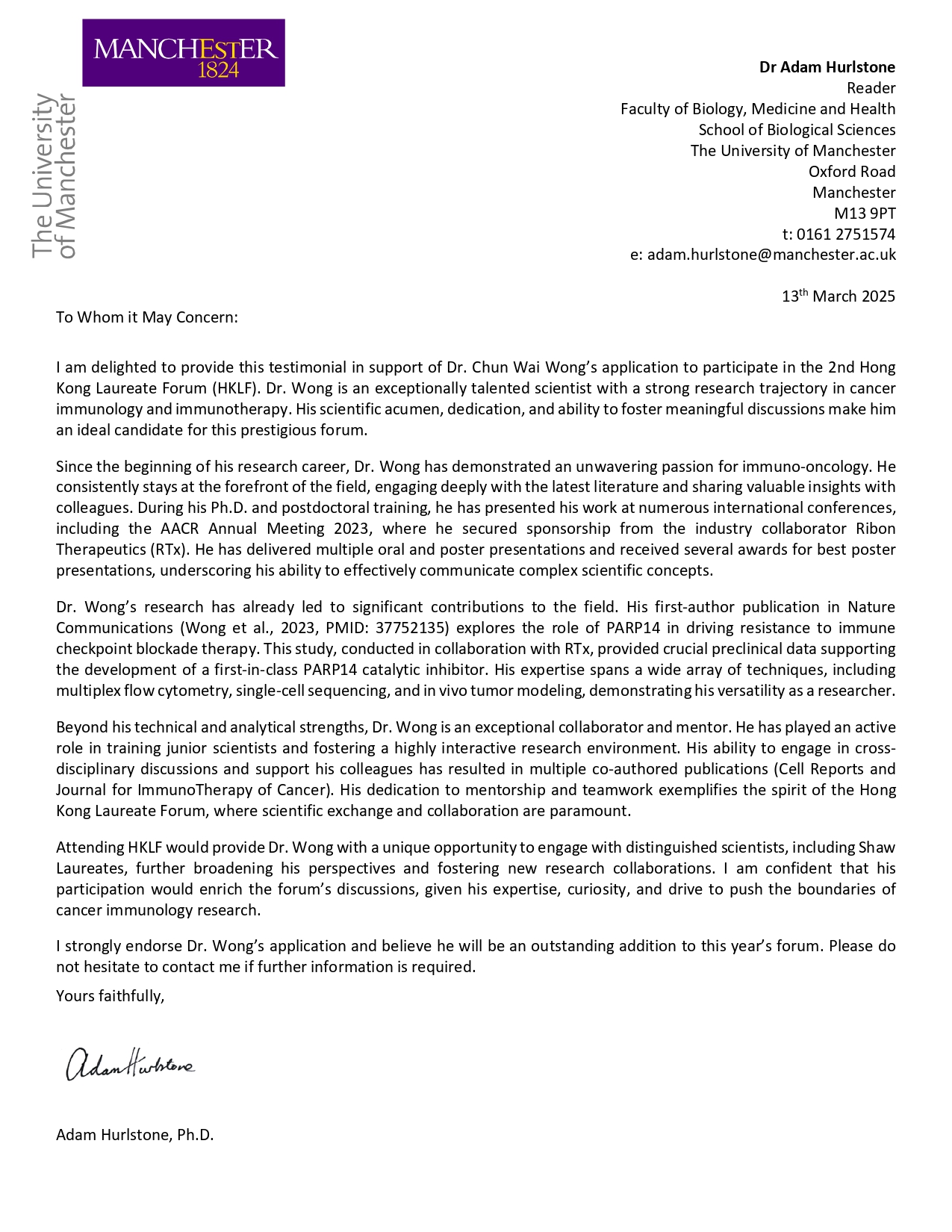
The University of Manchester
First Academic or Research Referee *
Dr. Nir Hacohen
Massachusetts General Hospital, Harvard Medical School
Professor of Medicine
Email hidden; Javascript is required.
Second Academic or Research Referee
Dr. Adam Hurlstone
The University of Manchester
Reader
Email hidden; Javascript is required.
2019 Scholastics Award, Hong Kong Baptist University
2021 Doctoral Academy Conference Support Fund, The University of Manchester
2022 Public’s favorite poster of Doctoral Academy Postgraduate Research Poster Exhibition, Doctoral Academy, The University of Manchester
2022 Best poster of the British Society for Immunology Checkpoint Blockade conference, British Society for Immunology
2023 Best presenter of the 5th China and UK Forum of International Young Scholars in Manchester, Chinese Students and Scholars Association in Manchester
2024 Translation 4 ECRs (T4E) 2024 Funding Award, Translation Manchester, Wellcome Trust, Institutional Translational Partnership (TPA), The University of Manchester
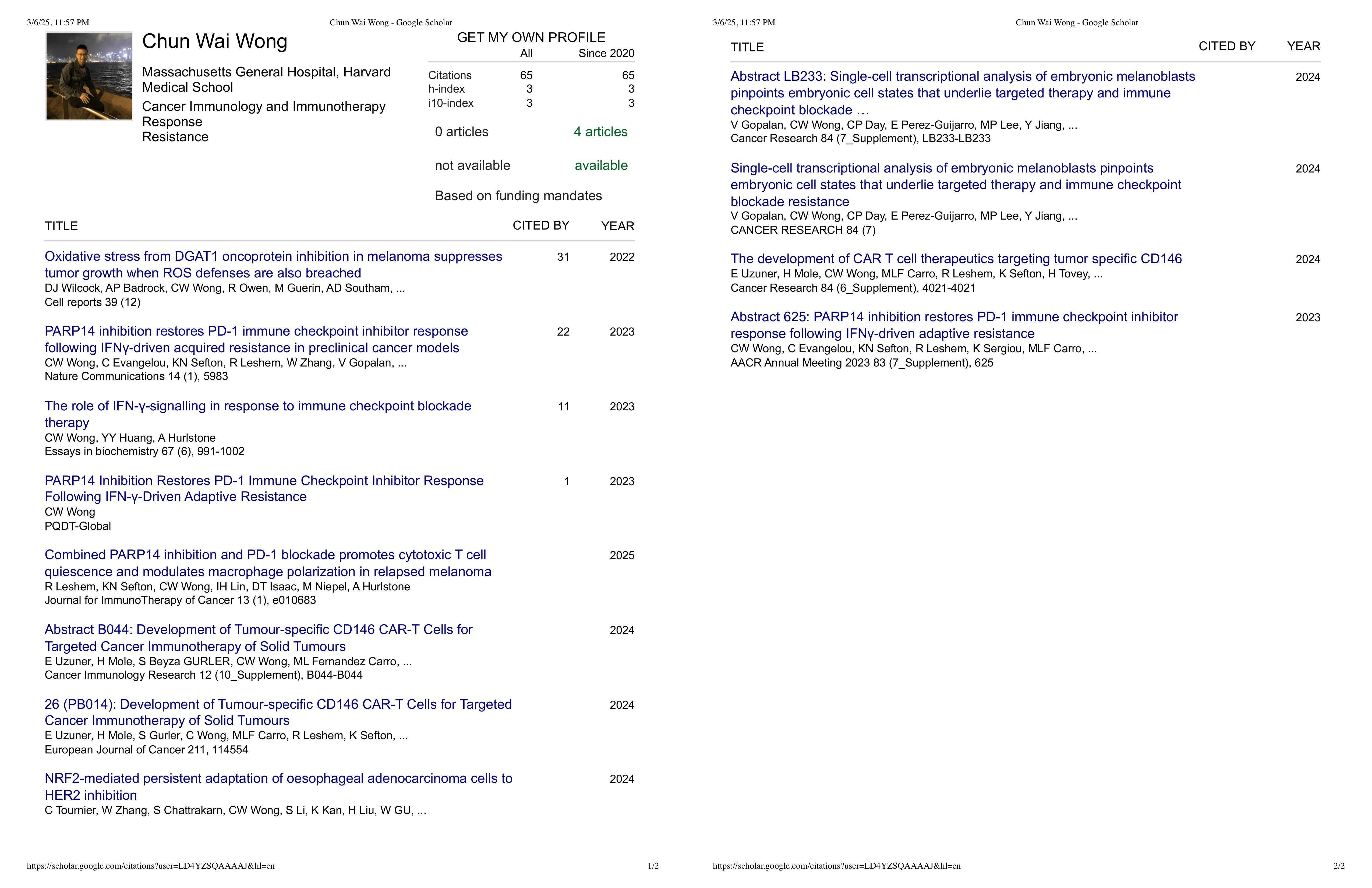
Metastatic non-small cell lung carcinoma (mNSCLC) remains a leading cause of cancer-related deaths globally. In 75% of patients without genetic driver alterations, first-line treatment consists of chemoimmunotherapy combining pemetrexed (Pem) and carboplatin (Carb) with anti-programmed cell death protein 1 (anti-PD-1) checkpoint blockade (CPB). Pem/Carb induces cancer cell death and anti-PD-1 CPB reinvigorates CD8+ T cells to restore anti-tumor immune activity. In clinical studies, the Pem/Carb/anti-PD-1 CPB combination treatment only has a response rate of around 20% because of primary resistance and frequent disease recurrence. There is a pressing need to uncover novel targets to improve the current poor response rate of patients with mNSCLC.Currently, there is no clear understanding of how Pem, Carb, and anti-PD-1 CPB work together mechanistically, the overall goal of this proposal is to uncover and characterize tumor-intrinsic genes which are responsible for promoting response and resistance to Pem/Carb/anti-PD-1 CPB and their mechanisms. We have two specific aims to achieve in this project: 1) Identify and characterize novel regulators of cancer cell death mechanisms triggered by Pem/Carb therapy; 2) Define tumor-intrinsic factors that regulate immune responses during Pem/Carb/anti-PD-1 CPB. These may guide rational combination strategies with the current first-line treatment to enhance anti-tumor immunity and increase survival.
Both Sessions